
Almost every cup of milk chai in India starts with CTC tea from one of two places: Assam or the Dooars. Both lie east of Siliguri, where our family has bought and blended tea for 35+ years: the Dooars begin almost at the town's edge, and Assam lies beyond them. They make two very different cups. Here's how they differ, which one is "stronger", and how to tell them apart in your own kitchen.
Where they grow
Assam is the big tea-growing valley of the Brahmaputra, in the state of Assam. Its low, hot, humid plains produce some of the most full-bodied tea in the world.
The Dooars are the plains at the foot of the Himalayas in north Bengal, just east of Siliguri, running towards Bhutan. The name comes from the word for "doors", the passes into the hills. Dooars gardens sit closer to the mountains, and their tea has a character of its own.
How the cups differ
- Assam CTC is malty and heavy-bodied, with a deep colour that stays rich and coppery after the milk goes in. It's the backbone of a kadak cup.
- Dooars CTC is brighter and brisker, with more lift and aroma, and it colours the cup quickly. On its own it can feel lighter in the mouth than Assam.
So which makes stronger chai?
It depends on what you mean by strong. If you mean body, the full, malty taste that holds up to milk and sugar, Assam usually wins. If you mean a sharp, brisk cup with a lively aroma, Dooars often feels stronger at first sip.
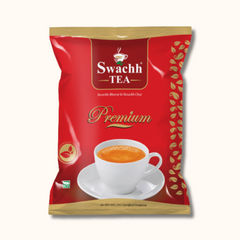
That's why most good chai is a blend rather than one or the other. Our Premium CTC Chai is built mainly on Assam for strength, with Dooars for lift and aroma, so the cup is both full and fragrant.
How to tell them apart at home
You don't need a tasting room, just two pans and the same method for both:
- Weigh the same amount. 2.5 g of each tea, about a level teaspoon.
- Brew them the same way. 75 ml of boiling water, two minutes of simmering, then 75 ml of milk and two minutes more. (Our 4-minute method explains why the timing matters.)
- Look before you taste. Check the colour once the milk is in. The tea that stays deeper and more coppery has more body.
- Taste for malt and brightness. Malty, rounded and heavy points to Assam. Brisk, bright and aromatic points to Dooars.
Why the same tea can taste different through the year
Both regions pluck tea from spring to late autumn, and the leaf changes with the weather. A lot made in one month can taste quite different from one made a few weeks later. That's why we taste every lot before we buy it, rather than relying on a garden's name. We explain how in What a 3-step quality check involves.
Try both in one cup
If you'd like to taste what Assam and Dooars do together, start with a pouch of Premium CTC Chai, or browse the whole chai range.